
Managing cash flow as a UK importer and exporter of goods can feel like navigating a minefield. You order stock, pay suppliers and even pay customs duties before you’ve even sold a single item. This ties up large amounts of cash that you could otherwise spend on marketing or hiring.
But all is not lost. Bonded warehouses could help you defer duty payments and improve cash flow. In this guide, we’ll explain what bonded warehouses are, why they work and how you can use them to improve your cash flow.
What is a bonded warehouse?
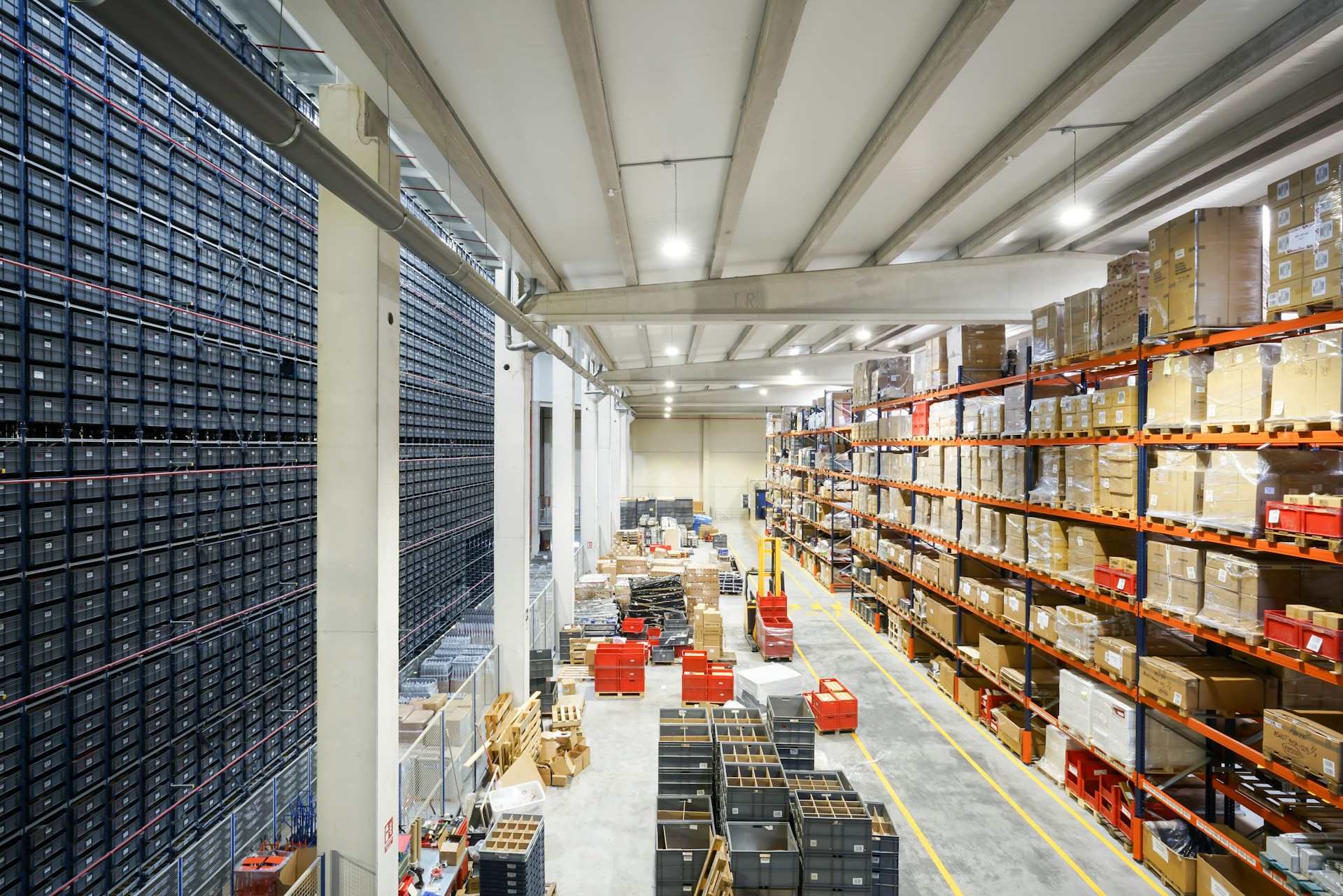
A bonded warehouse, also known as a customs warehouse, is a secure storage facility where you can store goods imported for sale outside of the UK without paying customs duties or VAT.
Bonded warehouses are authorised by HMRC and offer a duty-free zone within the UK where you can store goods until you’re ready to sell them. They are called bonded warehouses because the goods are “under bond”. That means the warehouse operator guarantees duty payment on all goods.
Let’s say you import £100,000 worth of consumer electronics from China, with a combined duty and VAT of £25,000. Without a bonded warehouse, you pay this immediately. With a bonded warehouse, however, you can store the goods duty-free, sending them to the continent as required.
How does a bonded warehouse work?
Using a bonded warehouse is fairly straightforward. Here’s what the process typically looks like:
Step 1: Import declaration
When your goods arrive at a UK port, you’ll complete a customs declaration using a specific customs procedure code (CPC). This can be done through HMRC’s Customs Declaration Service (CDS), either as a full declaration or using simplified procedures.
Step 2: Transport to the bonded warehouse
Your goods must travel directly to the bonded warehouse within five days of customs clearance. The journey is tracked, and any deviations could trigger duty payments.
Step 3: Storage under suspension
Once inside the warehouse, your goods are stored under customs supervision. No duties are payable during this period. You can store goods for as long as you like, provided the warehouse maintains its HMRC authorisation and you keep accurate records.
Step 4: Release or re-export
When you’re ready to sell goods in the UK, you complete a removal declaration and pay the outstanding duties and VAT. Alternatively, you can re-export goods to another country without paying any UK duties at all.
What are the benefits of a bonded warehouse?
Bonded warehouses offer several benefits to UK retailers looking to improve their cash flow and reduce their tax burden.
Improve your cash flow
The most compelling advantage is improved cash flow. Instead of paying 25-33% of your goods' value upfront, you defer payment until goods leave the warehouse. This aligns your costs with revenue and can free up substantial working capital.
Re-export goods without double duty
If you import goods for international markets, bonded warehouses help you avoid "double duty", paying UK taxes on goods you immediately re-export to the EU or elsewhere. Goods shipped directly from a bonded warehouse to another country incur no UK duties.
Reduce risk when launching new products
Planning to launch a new product? Bonded storage lets you import goods and test market demand before committing to duty payments. If the product flops, you can re-export without paying UK duties. If it succeeds, you release stock gradually as sales grow.
Process goods and carry out value-adding activities
You can perform standard handling operations within a bonded warehouse, such as repackaging, labelling and sorting, without triggering duty payments. This lets you prepare goods for specific markets or customers while still under duty suspension.
Increase bulk purchasing power
With duty deferral, you can import larger quantities to secure better supplier prices without worrying about immediate tax bills. Store the excess in bond and release it as needed.
Are there any issues to be aware of when using bonded warehouses?
While the benefits are substantial, bonded warehousing isn’t without complexity. Here are some potential hurdles.
- Compliance burden. Every movement must be tracked and recorded. You must maintain detailed audit trails that include commodity codes, movement dates, and ownership details. HMRC can inspect records at any time.
- Security requirements. Bonded warehouses must meet strict security standards, including CCTV, alarm systems and access controls. These costs are typically built into storage fees.
- Administrative complexity. You’ll need to manage additional customs declarations, warrants and documentation. While third-party warehouses handle much of this, you still need to understand the procedures.
- Brexit implications. Post-Brexit, goods moving from the EU to the UK generally require customs declarations and can use bonded storage. However, EU goods may have different eligibility depending on their commodity codes and any applicable trade agreements.
- Limited to certain goods. You can store most non-EU imports in bond, but products covered by the Common Agricultural Policy (CAP), like certain oils, fats, meat and sugar, have specific arrangements.
Save costs and reduce taxes with Pro Carrier
If you regularly import goods to sell outside of the UK, a customs bonded warehouse can transform your cash flow and give you competitive advantages. The ability to defer duties, test markets and re-export without double taxation makes it particularly valuable for e-commerce, retail and distribution businesses.
While compliance requirements are stricter than standard warehousing, third-party bonded facilities handle most of the complexity. The cash flow benefits typically far outweigh the additional administrative effort.
But bonded warehouses aren’t the only way to improve your cash flow and reduce your tax burden, however. By working with a third-party logistics provider like Pro Carrier, you can reduce your costs and tax burden at every stage of your supply chain.
For more information, speak to one of our experts today.